
Bali is widely celebrated for its ancient temples, sacred ceremonies, and distinctive Hindu traditions. Yet beyond its famous landmarks and popular tourist destinations, the island also offers fascinating stories of cultural exchange and religious harmony. One such example can be found in Gianyar, where Balinese Hindu and Chinese cultural traditions coexist in a remarkable expression of Indonesia’s multicultural heritage.
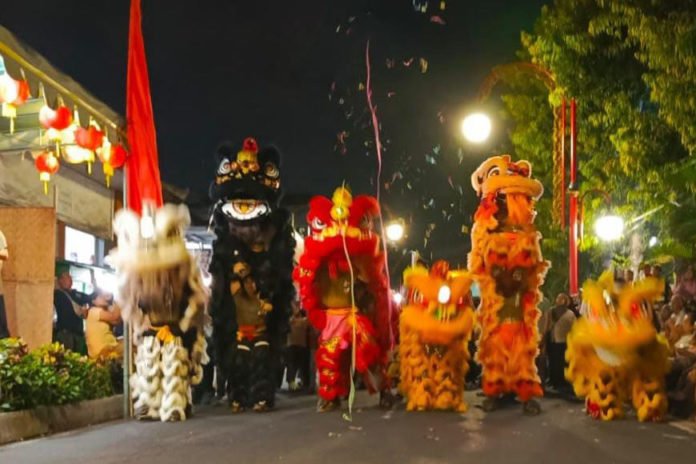
On October 24, 2026, the annual piodalan, or temple anniversary ceremony, at Pura Sri Sedana and Cong Poo Kong Bio in Gianyar brought this cultural connection to life. The celebration combined religious rituals, sacred Balinese dances, and lively lion dance performances, attracting devotees and visitors to the temple complex.
A Sacred Place with Centuries of History
Located on Jalan Dipta No. 14A in Gianyar, Pura Sri Sedana and Cong Poo Kong Bio are associated with a long-standing local history passed down through generations.
According to local oral tradition, the site is connected to a sacred journey from Pura Ulun Danu Batur, a revered temple near Lake Batur, toward Masceti Beach in Blahbatuh. The story recounts that rain fell specifically at the place where the travelling group stopped, leading to the establishment of a sacred marker known as turus lumbung. Over time, the site developed into the temple and Chinese-style place of worship seen today.
The complex also reflects the historical presence of Chinese communities who settled near the Gianyar Royal Palace and worked as traders. Its cultural identity is linked to Ratu Subandar, a figure associated with Chinese merchant traditions and worship at Pura Ulun Danu Batur.
Today, the site represents more than a place of worship. It offers a glimpse into how cultural traditions, spiritual beliefs, and commercial connections have shaped Balinese society over many generations.
Where Balinese Hindu Rituals Meet Chinese Traditions
The annual piodalan is a particularly meaningful occasion to witness this cultural relationship.
During the ceremony, traditional Chinese religious practices, including the use of incense and candles, take place alongside the offerings and ritual preparations characteristic of Balinese Hindu worship. The combination provides a striking example of how different cultural traditions can retain their distinctive identities while sharing a common sacred space.
The celebration also features several traditional Balinese dances, including Rejang Dewa, Baris Gede, Rejang Renteng, Rejang Sari, and Topeng Sidakarya. These performances are presented by members of the temple community and residents of the surrounding Sangging neighbourhood.
The Chinese temple honours several principal deities, including Cong Poo Kong, associated with commerce; Kwan Kong, associated with justice; Tan Hu Sin Jin, associated with architecture; and Cai Sen Ya, associated with wealth. Together, these traditions reveal the diversity of spiritual life in Bali and the enduring connections between the island’s communities.
Lion Dances Bring the Celebration to Life
Beyond the solemn religious ceremonies, the four-day celebration features cultural performances each evening. Traditional Balinese dances, including Manukrawa performed by students of SDN 3 Gianyar and Puspanjali performed by members of the temple community, form part of the programme.
One of the major attractions is the appearance of more than ten lion dance groups representing associations from Denpasar, Gianyar, and Klungkung. The lion dances add colour, movement, and festive energy to the occasion, creating a lively contrast with the more contemplative moments of religious worship.
According to Nyoman Aryawan, head of the temple community, approximately 120 households are associated with the temple, most of them living in Gianyar District. Worshippers from outside the area also visit during the ceremony. The temple welcomes people from different backgrounds who wish to pray, reflecting a spirit of openness and religious coexistence.
A Cultural Experience Beyond Bali’s Famous Attractions
For international travellers, Gianyar offers an opportunity to explore Bali beyond its beaches, luxury resorts, and well-known temples. The area is recognised for its artistic heritage, traditional villages, royal history, and living cultural practices.
Experiences such as the piodalan at Pura Sri Sedana and Cong Poo Kong Bio offer insight into the relationships between religion, community life, and cultural identity in Indonesia.
Visitors should remember that a temple anniversary is first and foremost a religious occasion, rather than a staged tourist performance. Anyone wishing to attend should approach the ceremony respectfully, follow local guidance, dress modestly, and ask permission before photographing worshippers or sacred rituals. Access to certain areas may be restricted during religious ceremonies.
The event described here took place on October 24, 2026. Travellers interested in experiencing similar celebrations should check local ceremonial calendars and confirm dates and visitor access in advance, as Balinese religious events follow traditional calendars and may vary from year to year.
Discover the Cultural Heart of Indonesia with Melali Indonesia Journeys
Indonesia’s cultural richness lies not only in its famous monuments but also in the everyday traditions, community celebrations, and shared histories that continue to shape local life.
Through thoughtfully designed journeys, Melali Indonesia Journeys invites travellers to discover these meaningful cultural encounters while exploring Bali and other remarkable destinations across the Indonesian archipelago. From the artistic villages of Gianyar to Bali’s sacred temples and beyond, every journey offers an opportunity to connect more deeply with Indonesia’s people, heritage, and living traditions.
Travel thoughtfully. Discover Indonesia beyond the ordinary.
Source: Bali Post, 26 Oct 2026 (Melali Media Team)